

Mom's Memories
Thirty years ago, my mother Lee did much the same thing I am doing now and committed some of her memories to paper. I am very pleased to be able to include them below, un-edited - apart from a few of my headings and pictures. I'm sure these stories, dating back over a hundred years, will be of interest to family and historians alike.
Lee’s Memories
The event of November 25th, 1919 is, of course, not my own memory, but is what my mother reported to me.
On that day, a pair of twins was delivered to Anna and Viggo Jensen, one of which was I. This was a home delivery and “twins” came as a complete surprise to everyone concerned, pre natal care being virtually non-existent at that time. The babies weighed about 4 pounds each and were not expected to survive. My parents being good Lutherans were eager to get the babies baptized, so the minister was immediately called to the house. My father had wanted the boy named Leroy, but what to name the girl? Since the babies were twins, my mother felt the girl’s name should begin with “L”, but couldn’t think of a good “L” name. Keep in mind, she had just been through a home delivery and was probably not feeling too alert. She had recently read a book about a pretty nice girl named Liala, so that is the name I was given. In retrospect, it seems more likely that the name was Laila, which my mother misspelled.
As soon as the babies were baptized, my maternal grandmother took over. She forced warm liquid into their mouths and wrapped and warmed them in the oven of her wood range. Leroy did not survive, but I grew into a healthy baby.
The name Liala became quite an inconvenience. While I was growing up, it was mispronounced in a dozen different ways, many of which were quite impossible from the letters given. When I went to college, my professors pronounced my name Lee-AH la. I liked that better but I was still getting many versions, so my sister Alleyne suggested I shorten it to Lee. From then on, I was Lee and it simplified my life.
My childhood was simple and pleasant. Alleyne was 3 years older than I and pretty much told me what to do in a very nice way. The Zinters, our neighbors, had 13children, the youngest 4 being close to us in ages. Mrs. Zinter allowed us to use part of their basement as our ”General Store.” She and Mother would save empty cans boxes, bottles, and all sorts of containers with which we stocked the shelves. We spent hours playing store, filling orders, collecting money, writing receipts, etc. We also put on shows–lots of shows. Sometimes we charges 2 cents for admission, but mostly they were free.
School was 12 blocks from home, which we walked 4 times a day. Mother insisted we come home for lunch on all but the coldest days–and I mean below zero days. Snowsuits had not yet hit the market. We wore dresses and long white stockings. In winter we wore long underwear that made our white stockings very lumpy. Our snow boots were 4 buckle overshoes that admitted a goodly amount of snow inside when I tramped through the deepest drifts, leaving Mother to wonder why my stockings always got wet when Alleyne’s never did.
Alleyne and I were quite different types. She was studious, neat, polite, and spent lots of time reading. I was more likely to be found climbing trees, playing “make-believe”, jumping rope, standing on my head, etc.
Miscellaneous Childhood Memories. . .
Driving to Wilmot, South Dakota to visit Mother’s childhood friends.
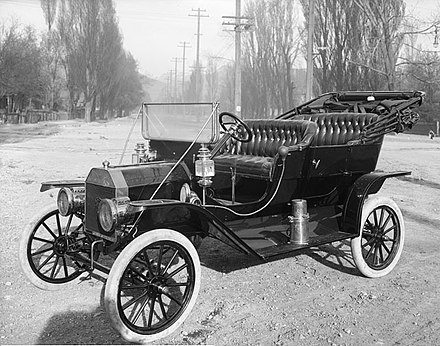
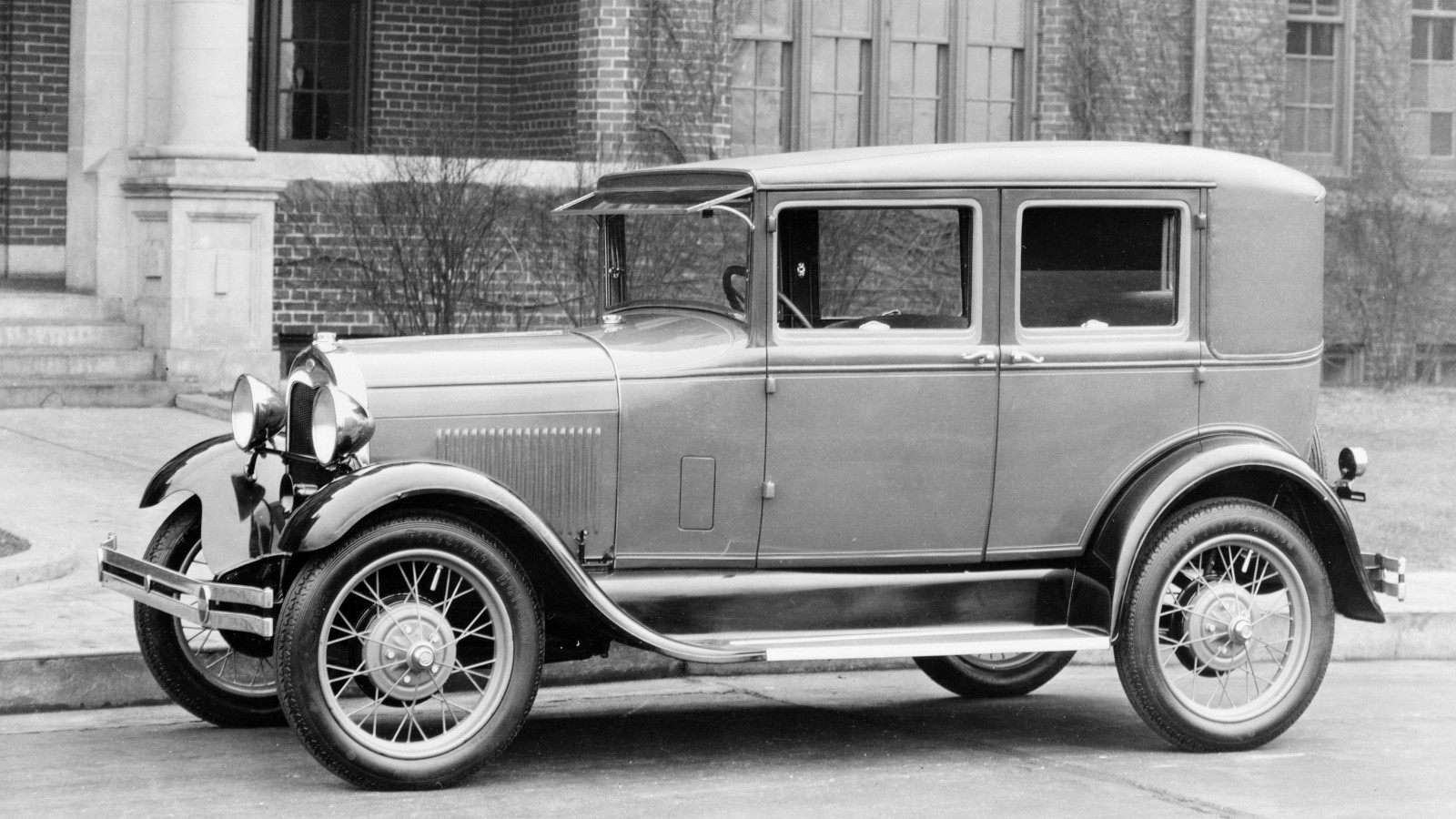
I was perhaps 6 or 7. We had an open car–Model T, I guess. I remember having to put up the isinglass curtains that buckled to the outside of the window. The dirt roads were washboardy, and the rain, which was the reason for the isinglass curtains, made horrible mud ruts. The distance was about 170 miles. I can’t remember whether or not we made it in one day. I have memories of staying overnight in a tourist cabin where we had to bring our own bedding. I think this may have been that trip. I do remember staying overnight in Wilmot where I was given a feather bed to sleep on. Next morning I had a number of red, itchy spots that embarrassed our hostess. Mother told me later that they were bedbug bites. Until then my only knowledge of bedbugs came from the song:
Oh, the butterfly flits on wings of gold
The June bug, wings of flame;
The bedbug has no wings at all
But he gets there just the same…..
Oh, it ain’t a-gonna rain no more no more; it ain’t a-gonna rain no more.
But how in the world can the old folks tell
If it ain’t a-gonna rain no more.
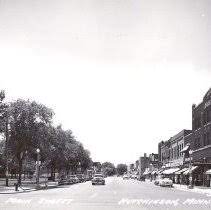
I was born a ham and dearly loved performing for an audience–any audience. So except for our neighborhood shows, this was pretty much limited to Sunday school programs. I could memorize quite easily so was always given poems to recite. This was OK but I really wanted to sing a song, and the singing was always given to Patricia Putney. She was a nice girl and I liked her well enough, but I must admit I was envious and really wanted a piece of her action. I guess if I have remembered it for all these years, it had to have been really important to me. Fifty years later, I had occasion to visit my hometown of Hutchinson, and asked my relatives whatever had become of Patricia Putney, wondering if she had become a professional musician of some repute. They said, “Oh, she lives on a farm and has 10 children.” I’m afraid I felt just a tinge of satisfaction and I’m somewhat ashamed to admit my childhood pettiness.

Making Root beer.
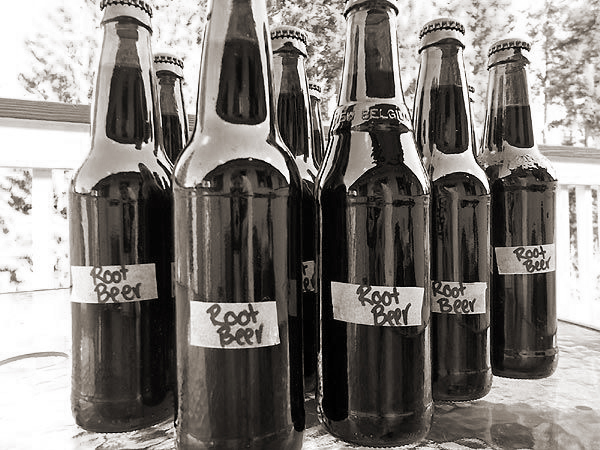
While bottled pop (Strawberry, cherry, orange, etc.) was available, bottled root beer did not seem to be. It had to be made at home from Hire’s Root Beer Extract, sugar, water and yeast. We saved all bottles that could be capped with standard metal caps. We had a bottle capper that my dad had fastened to a board to make it more stable. It was adjustable to accommodate bottles of different heights, and had a long handle for leverage. I usually got to do the capping, which I thought was great fun. Mother was meticulous about scalding the bottles and following the recipe instructions. After filling and capping the bottles, they had to be kept in a dark place until the root beer had “worked”. This took about a week as I recall, and we waited eagerly. Once ready it had to be used within a rather short period of time because contents kept “working”, becoming stronger and more volatile. If left too long, the bottles would explode, making quite a mess of shattered glass and sticky liquid to clean up. It seemed on every batch, we would hear an explosion or two from the basement. Oh, but it was SO delicious–very fizzy– it made my nose crinkle.
Washday!
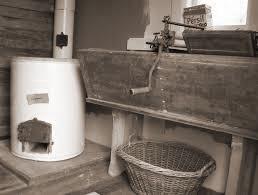
Washing was an all-day affair. The washroom in the basement contained a 2- burner kerosene stove that heated the boiler. Oh yes, the white clothes had to be boiled! First they were boiled, then fished out of the boiler with two sturdy sticks which my dad had hinged to make tongs, then carried to the washing machine for a 20 or 30 minute sloshing. (The soap was usually sliced Fels Naphtha bars) Now they were put through the wringer for the first rinse. Mother had little faith in the ability of the washing machine to get the clothes clean, so we had to give them a scrub on the washboard in the first rinse. My dad had built a large rack that held 2 large washtubs separated by a hand turned wringer. The wringer was attached to the rack and could swivel; so after the first rinse, Alleyne or I would crank the clothes into the 2nd rinse, giving them a good plunging in each rinse, then pivot the hand wringer and crank the clothes into the clothes basket from where they would be carried up the steps into the back yard and hung on the clothesline. When it rained, the clothes had to be hung on rope lines that were strung up in the other 2 rooms of the basement. In the winter, the clothes would freeze on the line and we had to be very careful bringing them in because if they were bent, they would break. It was definitely the hard way but it was the only way we knew. I have another horror story of washing during World Was II but that comes later.
The Great Depression
My father was a carpenter, and when the depression hit, no one had money to build, remodel, or even repair. I don’t know details on our finances but I know work was virtually impossible to secure. Finally Franklin Roosevelt established his work programs and my dad got on a program renovating public buildings for a salary of $15.00 a week
Then in 1934, friends of ours in Hutchinson. (the Hansens) decided to move to Sidney, Montana where the wife’s parents lived. Our house was being foreclosed (with a mortgage balance of only about $2000) so my parents felt that Sidney would be a good move for us too. Fort Peck Dam was being built some 120 miles from there and jobs on the dam project were plentiful. Also, Sidney was in an irrigated valley where the farmers were fairly prosperous. Of course, we had no funds for moving expenses. Henius Hansen, a farmer, was going to rent a freight boxcar to transport his furniture and farm equipment, and there would be room in the boxcar for our furniture too if we would care to share the cost. That is what we did and while there is no one left to corroborate or deny this, I truly believe that our share of that moving cost was less than $10.00.
Alleyne had graduated from high school that May and I had just completed my first year of high school. We were making the move in July. After packing all our possessions in the boxcar, we took off in our Model A Ford to drive from Hutchinson to Sidney–about 600 miles. We made a 3-day trip of it, partly because we were trying to time our arrival to the arrival of our boxcar; and partly because the roads were atrocious. In western North Dakota we hit heavy rain turning the clay road into gumbo which behaved almost like quicksand but much messier. At one point we had to have a tractor pull us out of a particularly nasty rut.
The day after the gumbo incident, we arrived in Sidney and found a house to rent. The very next day, Hallelujah, our boxcar arrived. With great excitement we went down to the tracks to watch the grand opening. Henius Hansen’s farm equipment had broken loose and crashed into our furniture. I remember the look on my mother’s face, a combination of disbelief and despair. For her, it must have seemed like the last straw. In time, my dad was able to repair most of the furniture, which never had been of great value, and I do have great admiration for the way they carried on through all of these difficulties without whining about their fate in life.
As soon as we were more or less moved into our house, Dad decided it was time for him to go up to Fort Peck to get a job. We were all to drive up to be sure he got hired, and then Alleyne would drive us back so we would have a car to use. Although Alleyne was 17, she had done very little driving. Of course, there was no driver training in those days. You got behind the wheel with your dad shuddering and gasping while he told you which pedals to use. I’m sure Alleyne was very apprehensive about the driving but didn’t object. It seemed the only solution. Well, Dad got hired right away and we started home. Again, the roads were terrible but we plugged along. When we got about 30 miles from home we came to a bridge that was really a railroad bridge. We must have somehow taken a wrong road but there we were and we had to get across. There were planks for a car to drive on, but that’s what they were—planks! Poor Alleyne! She drove white knuckled across on those boards at 3 miles an hour, and we made it! I should mention that Mother never learned to drive so she couldn’t help out. I will say though, that she was a great encourager and showed no fear. Dad only worked at Fort Peck for a few weeks and was able to get rides home so we didn’t have to make that trip again. After that he became acquainted around Sidney and was able to get carpentry jobs for the farmers in the area.

Sidney Dust Storm
These were the mid 30’s, the Dust Bowl years. While we didn’t get it as bad as Kansas, Nebraska, etc., the dust storms were indeed dreadful. I have a vivid memory of a particular Sunday when we had driven out to visit friends who lived on a farm. The weather was very hot so we had left the windows open. While we were there, with no warning, the hurricane force wind came up blowing the dust to zero visibility. There was no way we could drive home so we had to wait it out. Following the dust came torrential rain being driven horizontally. Finally, the wind let up and we could go home. What a mess! Mother and Dad had a white chenille bedspread on their bed. The blowing dust had completely covered it, after which the rain had blown in, giving it a thick coating of mud that we could scrape with our fingernails. I presume the whole house was pretty much the same, but the picture of that mud covered chenille bedspread is stamped in my memory.
High School
I had already completed my first year of high school in Hutchinson; the last 3 in Sidney were quite pleasant. We had a music teacher who was fresh out of Concordia College in Northfield, Minnesota where they place a high priority on vocal music. Finally, I got to sing the solos I had wanted to do since those Sunday school programs. I was pretty nervous about singing for the district music meet, but it was exciting too. I don’t believe I created any great sensation but I got through it OK
My favorite subject was geometry and I was fortunate enough to win the district scholarship contest, which entitled me to an expense paid trip to Bozeman, home of Montana State College, to participate in the state contest. The best part of it was the fact that Bozeman is in mountainous country and I had never seen mountains. Two other Sidney High students had won the district contest in other subjects, (it wasn’t a very big district:), so we all got to ride to Bozeman (about 450 miles) with the school principal. It was in March or April; the snow was long gone in Sidney, but those mountains, which are quite spectacular at any time, were covered with it. I was totally in awe! Scholastically, I was no match for students from larger schools, but the trip was memorable.
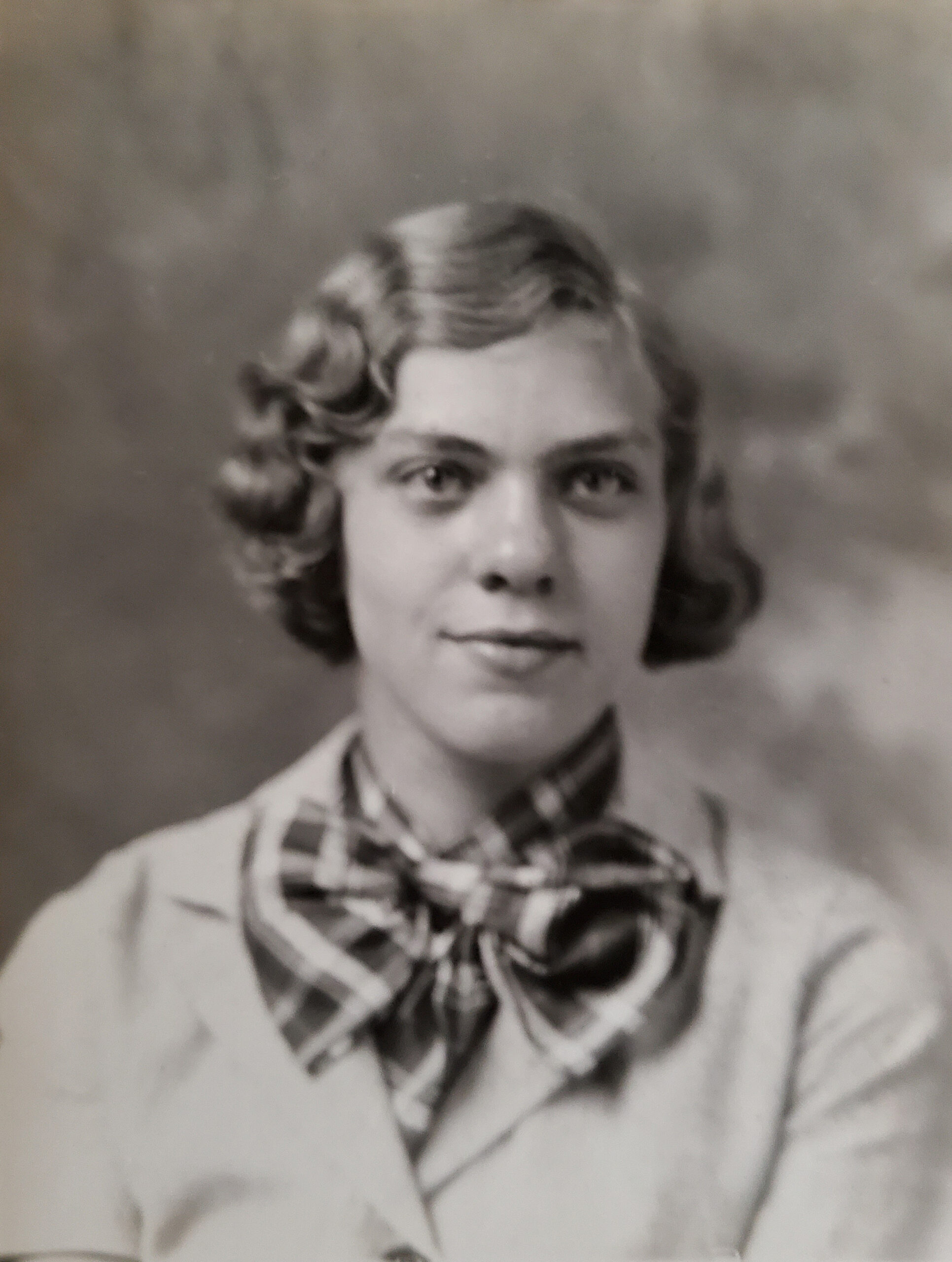
In my senior year I achieved my great desire to perform in a play. The senior class play which was selected was The Late Christopher Bean, and I got the role of Abby, the hired girl of a doctor who had been given paintings of the artist, Christopher Bean, as payment for medical bills he had incurred before his death. Now, several years later, the doctor’s family learns that the artist’s paintings have become extremely valuable. The greed of the family is exceeded only by their astonishment when they learn that Abby is the widow of the artist and the rightful owner of the paintings. It was a fantastic experience for me.
Jobs
Like so many high school students, I was eager to earn money, and the most available jobs were baby-sitting. The going rate among the people I knew was 10 cents an hour, with an afternoon session of say 1:00 to 5:00 going for the bargain rate of 25cents. And that usually included washing up any dirty dishes. After my junior year, I got a summer job at the Ben Franklin Store–6 days a week (48 hours) for $9.00 a week I was 16 at the time and glad to have a job.
Perhaps the greatest perk that came from attending Sidney High School was that as salutatorian I qualified for a scholarship to any state college or university. I chose the University of Montana at Missoula. It was all the way across the state from Sidney (700 miles) and would mean coming home only once during the year, at Christmas, but it was my choice. Alleyne was already a student there so I wouldn’t be alone.

Alleyne Goes to College
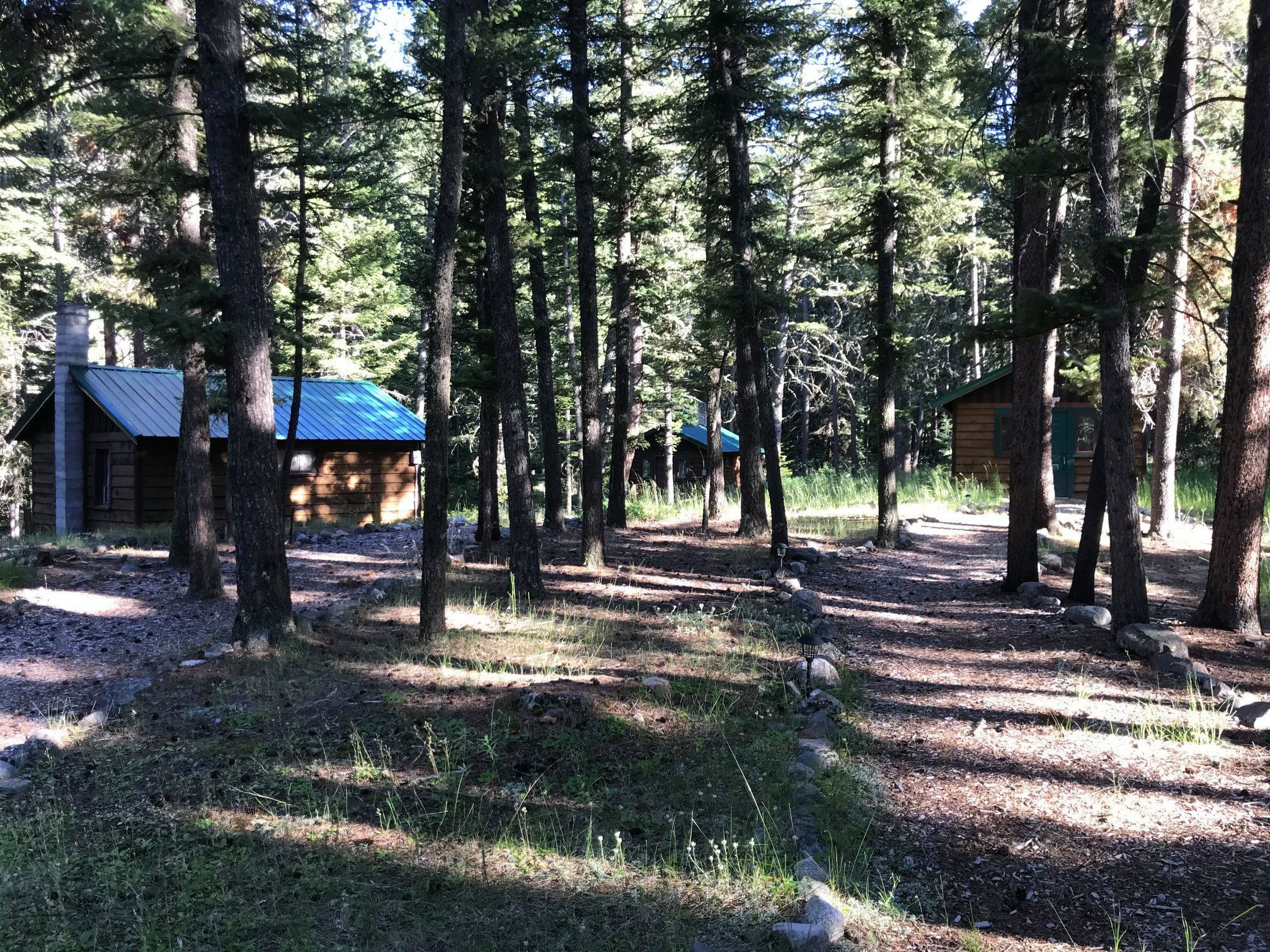
Alleyne was definitely brains of the family and had a burning desire to get a college degree and teach. The Montana universities were at the other end of the state from Sidney, which was only a few miles from the North Dakota border. Also, it would take 6 months residence to qualify for in-state tuition. So she stayed out the first year we were in Sidney and worked at menial jobs. We were actively involved in the Congregational church, and when summer came, we both went to the church sponsored summer camp, Camp Miminogish, in the Beartooth mountains south of Bozeman; a car full of us from Sidney, riding with our minister. It was a wonderful experience. While there, Alleyne became acquainted with the minister from Missoula, home of the University of Montana, and apparently spoke to him about her college dreams. When we returned home Alleyne received a letter from Mrs. Warford, wife of the minister, offering her room and board in their home in exchange for help and baby-sitting in their home. Tuition was very reasonable in those days and I presume Alleyne had saved enough from her jobs to get started. I’m sure my folks helped too as Mother was determined that her girls would go to college.
Alleyne has written a story about her first year at the Warfords, staying through the Christmas vacation to assist with their new baby who was born just before Christmas. She worked hard both academically and at Warfords and did extremely well.
Lee Goes to College
With my scholarship and Alleyne’s acquaintances in Missoula, I obtained a room at the Staley’s, a wonderful family, very active in the University Congregational Church, so named because it was located on University Avenue. (I have neglected to mention that although my parents had been raised as Lutherans, when Alleyne and I were old enough to go to Sunday school, our parents became Congregationalists because their Lutheran church was Danish speaking and we didn’t understand the language. So we were raised in the Congregational church.) Mary Staley was the organist so I became an instant choir member .I had a shared room at Staley’s, which my parents paid for. Mother rented out their two bedrooms to teachers and she and Dad slept in the basement. That paid room rent for Alleyne and me. I am unclear on where Alleyne lived that year, but she was no longer at Warford’s. I got a job working for my board at a home close to the campus in return for baby-sitting, dishwashing, and miscellaneous household chores. During that year, I mostly remember the youth group activities at the church, particularly spring break when a group of us went with Jack Warford, the minister, to a forest ranger cabin in the mountains for 3 or 4 days of sledding, tobogganing, etc.–Great time!
The following year Alleyne and I both rented rooms, not together, in a large home near the campus. I was in a triple room with cooking facilities, translation, a hot plate. This would have been 1938/39, and food was cheap. Mother was still sending her teachers’ room rent to pay our rent, and I had a part-time NRA job on campus. Alleyne did not have cooking facilities and was working somewhere that I can’t recall for her board. My 2 roommates and I put a total of $15.00 a week into the kitty for groceries. It was always enough.
That fall, young Gordon Bennett, fresh out of seminary, came to replace Jack Warford as minister of our church. I believe he was almost immediately smitten with Alleyne, a feeling that was mutual. They were married in June immediately following Alleyne’s graduation. Alleyne became pregnant very soon and, with a baby on the way, came up with a brilliant suggestion. I would live with them the following school year to help out both before and after the baby’s arrival, and with the money I would save on board and room, I could pay for voice lessons at the university.
It is hard to believe, but at that time weekly private lessons at the University cost $20.00 a quarter (13 weeks). There was a new voice teacher from New York who had opted to come to Montana to raise his young family. I was fortunate enough to get him for my teacher and he was wonderful to me. He knew I didn’t have much money and gave me a lot of extra time that I didn’t pay for. I have had long years of pleasure from the training he gave me.
I continued to live with Alleyne and Gordon during my senior year. It was along in the spring when the Staleys invited me to go with them to a party sponsored by the Mountaineer Club, a hiking group. Another Mountaineer had brought his son to the party. There was dancing, and the son whose name was Bud Myrdal asked me to dance. There were not many there in our age group. We hit it off pretty well and he asked me for a date for the following week which I accepted. I managed to work into our conversation the fact that I sang with the University chorus who would be performing “The Messiah” the following night. I didn’t tell him that I would be singing the alto solos. Well, he came to the concert along with a friend, and when the alto solos were over he bet his friend that he could get a date with the soloist. His friend took him on and lost the sucker bet. Bud and I kept seeing each other and were married the following July.
Married Life
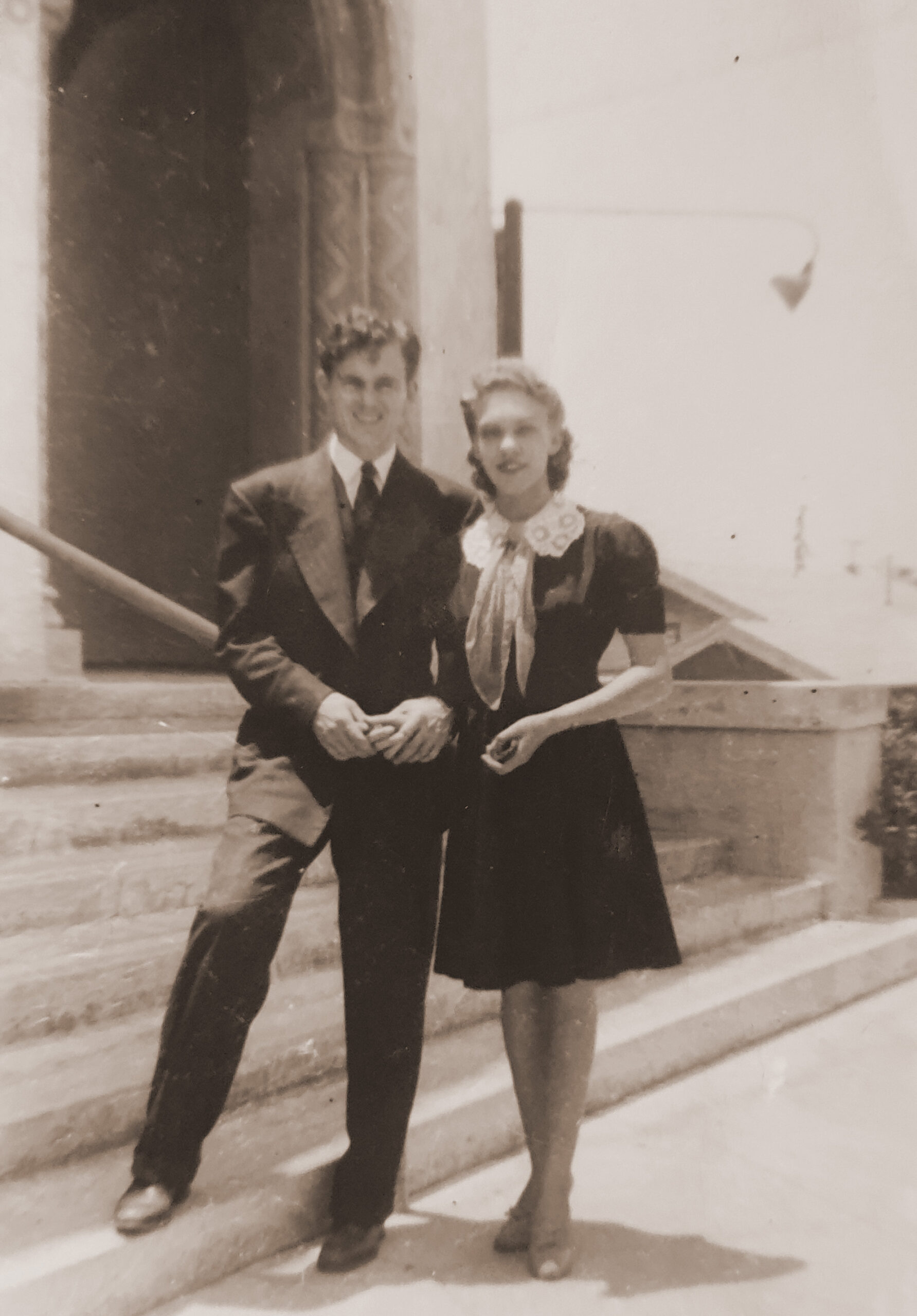
The year was 1941 and jobs in the aircraft industry were plentiful. In late spring Bud and his friend Keith went to Los Angeles and were immediately hired at Lockheed Aircraft. The plan was for me to come down to be married in California. It would not be easy for Bud to get time off, but there would be a 3-day holiday for the 4th of July. So we were married on Independence Day, which Bud called ironic. Keith and his wife Florrie were our witnesses and a very nice Congregational minister whose wife gave me gardenias from her garden married us. Our 3-day honeymoon was spent in a motel on Balboa Beach.
Early in our 6-month stay in Los Angeles, a friend of my mother’s Sidney neighbor contacted me and suggested that I try out for the choir of the very large Congregational church of which she was a member. The church was located on Wilshire Boulevard only half a mile or so from where we were living. Our $23.00 a month furnished apartment was on Seventh and Alvarado, a few steps from what was then Westlake Park, later named McArthur Park. The church was a short walk up Wilshire, through the park and a bit beyond. I was somewhat apprehensive about trying out for such a large choir but I went, music in hand, and was accepted. The choir was in the final rehearsals for their triennial Bach Festival. This little girl from Montana was way out of her class but I allowed myself to be carried along by the strong singers around me; and I must say it was a huge thrill to be a part of that glorious music festival. As I recall, it was a 3-night performance. I continued to sing with the choir for as long as we stayed in LA. In those days I had not a qualm about walking alone at night from our apartment to the church. After Pearl Harbor we experienced a few blackouts. We would walk over to the park and mull around with all the other people there. Occasionally, someone would light a cigarette and be chastised by someone for creating a spark.
About 6 weeks after we were married, we were spending a Sunday at the beach with our friends Keith and Florrie. Bud was diving into the surf, jumping the first wave and diving into the second. All was well until he tripped on a wave and was thrown head first into the sand between the waves. He walked out in considerable pain but waited until the next day to see a doctor where it was discovered his 6th cervical vertebra was crushed. He was put into a neck cast, which proved to be agonizingly painful. The cast was removed and he lay in traction in a hospital ward for 6 weeks. Fortunately, his insurance with Lockheed paid the medical bills.
Out of the hospital in October, Bud attempted to go back to work but suffered a lot of pain in his hands and arms. And then came December 7th and Pearl Harbor. Bud had not been able to continue working as the body position he had to maintain gave him agonizing pain. Come Christmas, Keith and Florrie who had a car (we did not) wanted to go back to Missoula so we piled our few belongings with theirs and headed back to Montana. We could stay with Bud’s dad, Swain Myrdal, until we could make other arrangements.
My recollections here are somewhat hazy and not particularly interesting. Bud was 4-F, of course, due to his neck injury, but was able to work at various jobs that didn’t entail holding his body in one position for any length of time. At one point, a job ( I don’t remember what) took us to Coeur d’Alene, Idaho. This was wartime and accommodations were very limited so we had to make do with a tourist cabin with a little tin stove for heat–and it was December. Shortly after we arrived we were walking down the street when for no reason, Bud’s legs buckled under him and he fell to the ground unable to walk. He was taken to Spokane, Washington (only about 25 miles away) where his condition was diagnosed as a neurological condition mimicking (but not) multiple sclerosis. His recovery was quite rapid; it seems to me he was in the hospital only about a week. While he was there I took a bus over to see him every day–we still didn’t have a car. But we did have a Dalmatian puppy. We had put up a Christmas tree before Bud fell, and every day when I came home from the hospital I would find the lights and our few simple ornaments on the floor along with the results of his being closed up for those hours. Of course, the cabin would be very cold so I would build a fire in the tin stove with lumberyard trimmings, the only fuel we could get. The place would warm up very quickly but the fire lasted about as long as it took to put in more wood trimmings. Bedtime was when our puppy, was worth all the inconvenience. I took him to bed with me under the blankets and he kept me nice and warm. I should add, this was Christmas 1942 and I was 3 months pregnant with Jay. Bud apparently made a good recovery and for many years he had no further discomfort except for the pains in his hands, which was an ongoing thing.

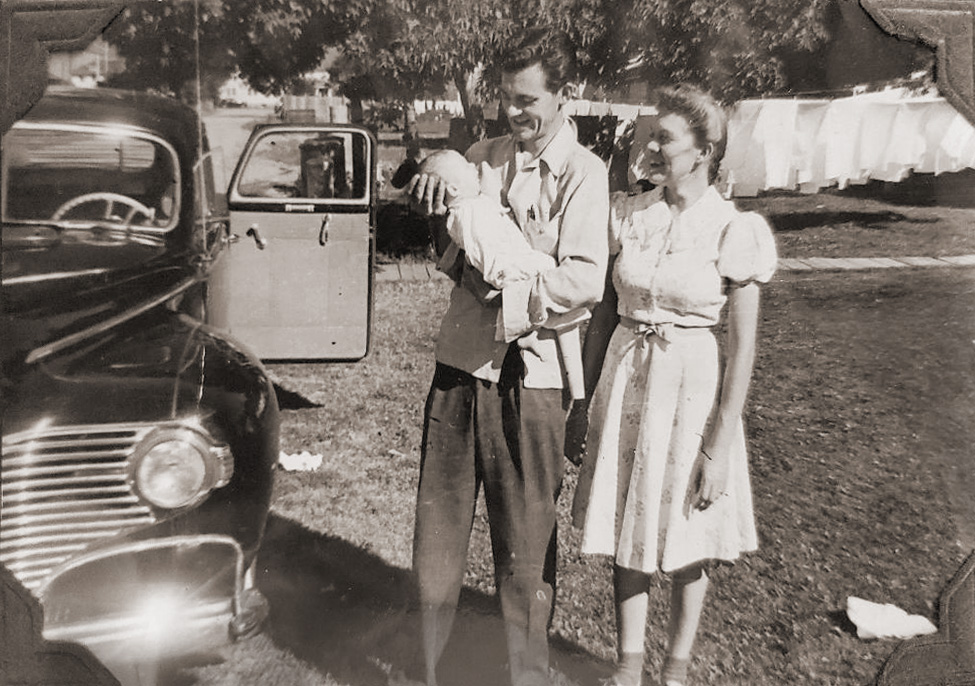
Fort Missoula - Missoula, Montana
After the above incident we moved back to Missoula where Bud got a job with the Immigration Service, guarding Japanese and Italian internees at Fort Missoula. I believe the Japanese were from Hawaii and the Italians were merchant seamen. We lived in what had been officers’ homes when Fort Missoula had been an army post. Security was very light and we could hire the internees to help around the house and yard for next to nothing. Jay was born in June. He was named John Allan. However, there were 2 other babies on the post named John so we immediately started to call him Jay (his initials). It stuck.
When Jay was about a year old, several of the guards, we included, were transferred to Santa Fe, New Mexico. I don’t remember why. I also don’t remember what Bud’s duties were there but it again aggravated the pain in his arms and hands and he somehow transferred from the Immigration to the Customs Service and was sent to Duluth, Minnesota, where he worked on the boats coming into Lake Superior.
We were able to find a very pleasant 4-plex apartment with a lovely view of Lake Superior. It was a 2 story unit, the large old home having been divided into fourths. There was a fireplace in our upstairs bedroom, which we did not use, but which Jay, who had now become very agile on stairs, discovered. When I caught up with him he was sitting in the fireplace totally covered with black soot. He had rubbed eyes giving his black face 2 white circles. I was now about 8 months pregnant with Donna and it was a bit of a hassle getting him into the bathtub where it took several changes of bath water to get him clean.
This is the WW2 year of 1945 and many items were rationed including meat, sugar and butter. We had a new Dalmatian puppy. Our first Dalmatian (he of bed warming fame) had sadly died of distemper some years earlier. Since I was by now very pregnant, Bud would make his own early breakfast to give me some extra rest before Jay got up. He had made a sandwich and left the full pound of butter on the table. Shiner, so named because of the black blotch over one eye, had found the butter, knocked it to the floor, eaten a large portion of it, and then lost it on the living room rug. It was almost enough to induce labor on the spot.
I almost wish it had because Donna’s birth was about 2 weeks late; this after the doctor had predicted an early delivery. I thought she would never arrive, but when she did she was gorgeous. In those days you stayed in the hospital for several days after delivery and the nurses doted on her. They played with her in the nursery and would bring her in with her hair brushed into a kewpie curl. Donna was born on March 20th and Jay who would not be 2 until June adored his baby sister.
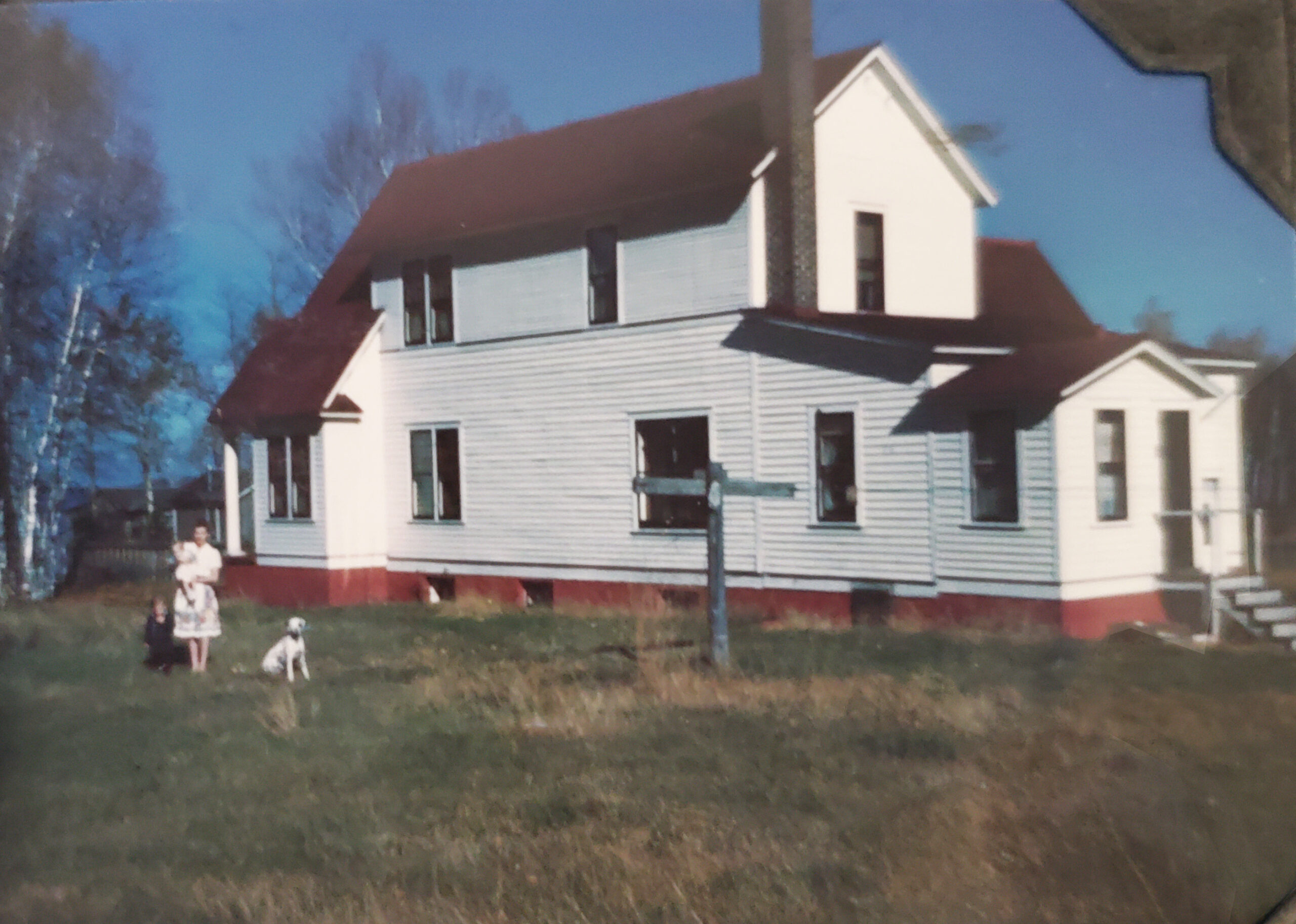


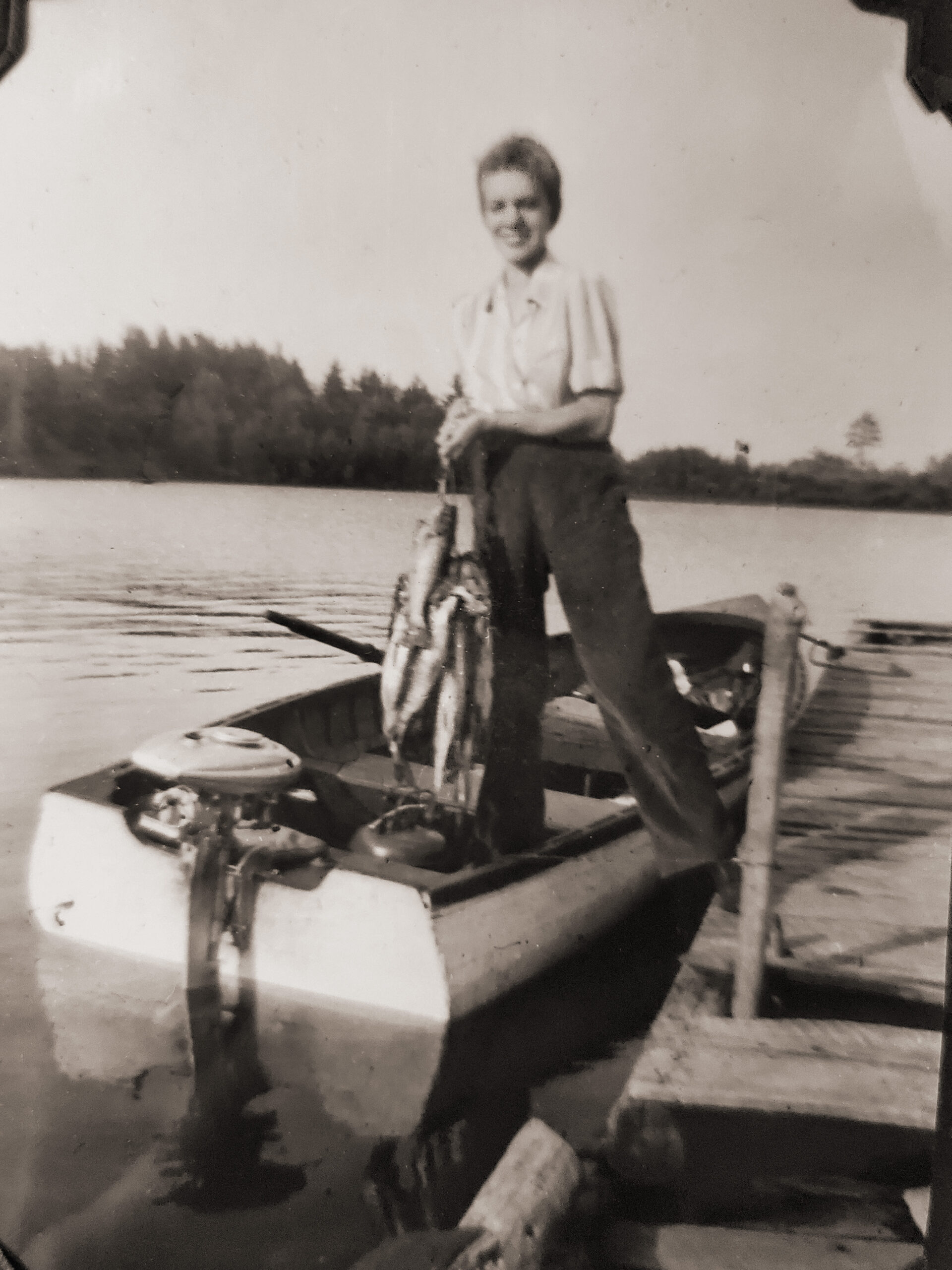
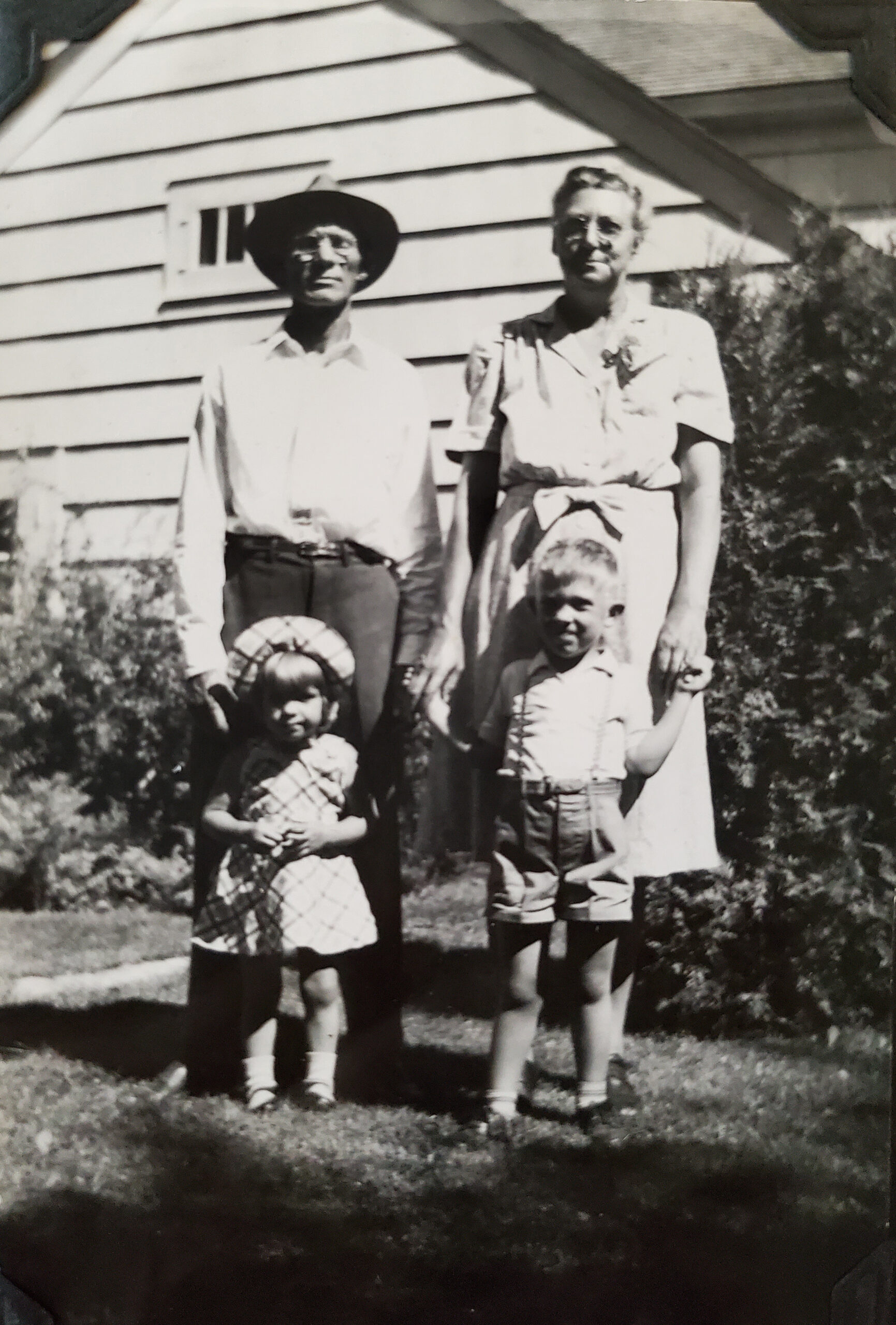
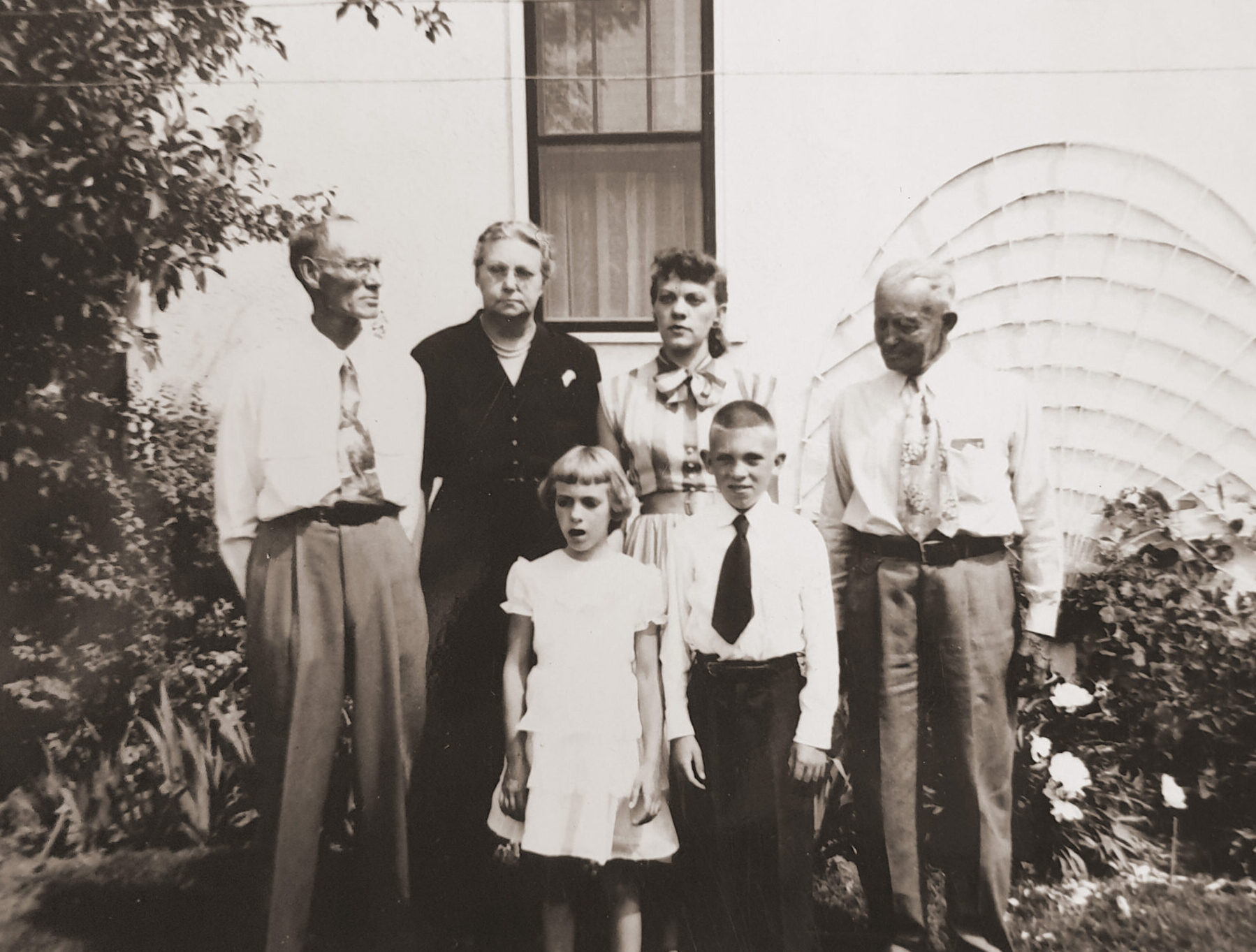
From Duluth Bud was transferred to International Falls to serve as a customs officer on the border crossing to adjoining Fort Frances, Ontario. Our government was being very eager to intercept any rationed or banned items being smuggled from Canada. We arrived in International Falls on July 4th with no arrangement for housing. We finally had a car and drove out to beautiful Rainy Lake just a few miles out of town. The day was sweltering, in the high 90’s. We had been told that there was a vacant house along the lake. We found the lovely large home, which was obviously vacant, and after some calls, learned that we could rent it. Of course, our furniture would not arrive for a few days but we could make do with the provisions we had brought in the car. Once inside, it was suffocatingly hot, having been closed up for several weeks. We opened wide all the windows, spread out blankets and sleeping bags on the floor and went to sleep. Next morning we got a rude taste of International Falls’ weird weather. During the night the temperature had plummeted into the 50’s and the house was freezing cold. The only source of heat was the furnace and there was no fuel. But Bud was resourceful. He somehow was able to have some coal delivered and shortly had a fire built in the furnace, which seemed to work just fine and we were soon comfortable. Once our furniture arrived the house was delightful for the remainder of the summer but the location was not practical for winter.
So we had to move into town into the only rental we could find, a somewhat dilapidated 2 story duplex. Its redeeming feature was the family in the other half who had 2 teenage daughters who were willing and very able to baby-sit. Heating facilities always seemed to be the hang-up during the war. Here, as in Coeur d’Alene, Idaho, the only source of heat was a round tin stove, and the only available fuel was lumber yard trimmings. We had to keep Donna, 6 months old, in a playpen supported on 4 chairs to keep her off the cold floor. When we moved in, the floor, which was soft wood, was filthy. I was scrubbing it on my hands and knees with the bucket of water getting muddy every few feet. Jay then 2 was carrying on a running conversation with whomever cared to listen, and backed into the bucket, jackknifing with his feet and arms sticking out. It was hilariously funny and Jay didn’t seem too upset, but the cleanup was a hassle. Our water heater stood beside the wood range in the kitchen and was heated by the fire in the range. I tried to keep a fire in it all the time, but the amount of hot water produced was somewhat limited. So Jay’s cleanup was a bit scant but we made do.
Washday was something else. I had an old wringer washing machine (don’t recall the origin), which I rolled into the kitchen accompanied by a large washtub, which had to sit on the floor. I didn’t have the luxury of my father’s wood rack from my childhood. Of course, I had to get a good fire going in the range to get enough hot water, which made the kitchen very hot along with being very crowded. But the worst part was the leak in the washer motor, which sprayed a fine mist of oil on the kitchen floor making it a virtual skating rink And, of course, no dryer. In summer I had lines outside but during those bitter winter months I strung lines around the living room. We did secure an oil burning space heater from someone who moved out of the area about a month or so after we moved in which made an enormous difference.
International Falls is generally considered to be the coldest place in the continental United States. Jay would beg to go outside to play so I’d bundle him up in layers of clothing and send him out to have him back at the door in 5 minutes wanting to come in. His snow packed clothes then came off and were draped around the heater to dry. I must say though, that the town does prepare for winter. There would be snow plows on the streets immediately after every snowfall and the snow banks on the street were so high that people tied flags to their car antennas to be seen around the corner. The city also ran snow plows down all the sidewalks.
But summer was delightful. I mentioned the teenage girls in the adjoining unit. They were almost always available to baby sit and were completely dependable. On Bud’s days off we would head for Rainy Lake, a very large and gorgeously beautiful lake, where we could rent a sturdy rowboat for a dollar and spend the whole day on the lake. We purchased a little 5 HP motor so we could fish and put-put to any of the lovely islands to picnic. Sometimes we would coordinate with some of the other border officers and picnic together.
Missoula, Montana
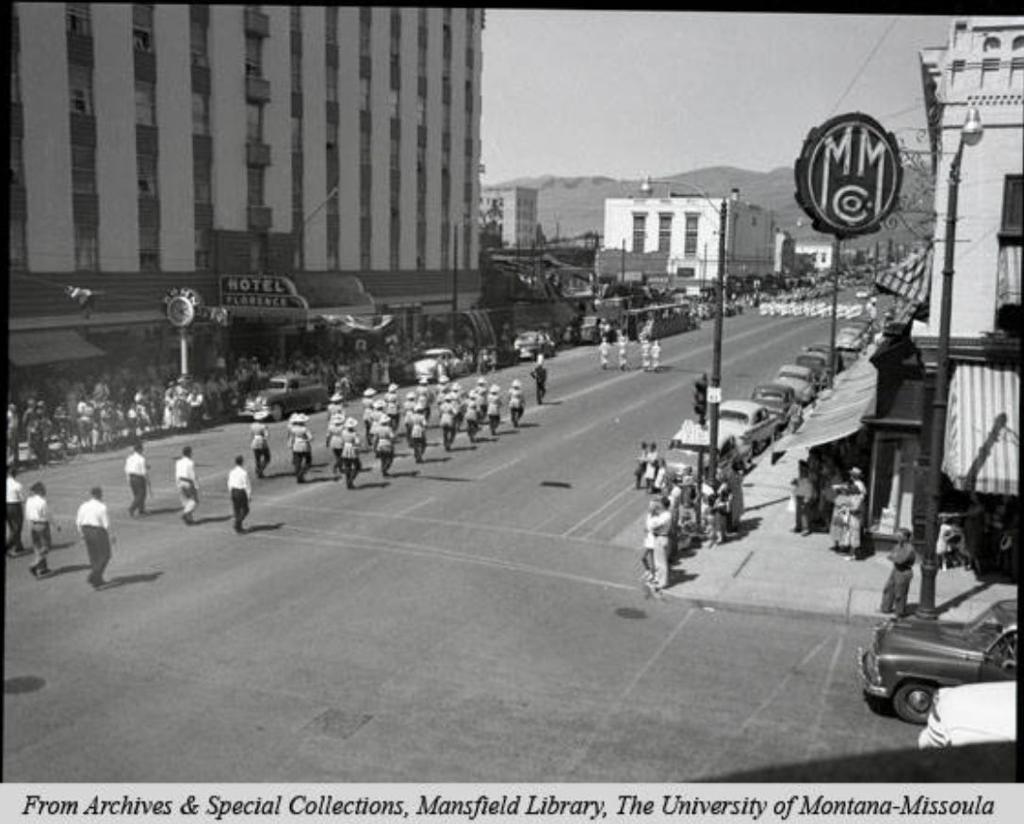
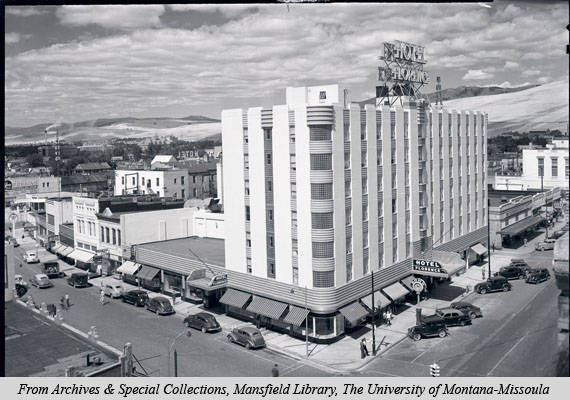


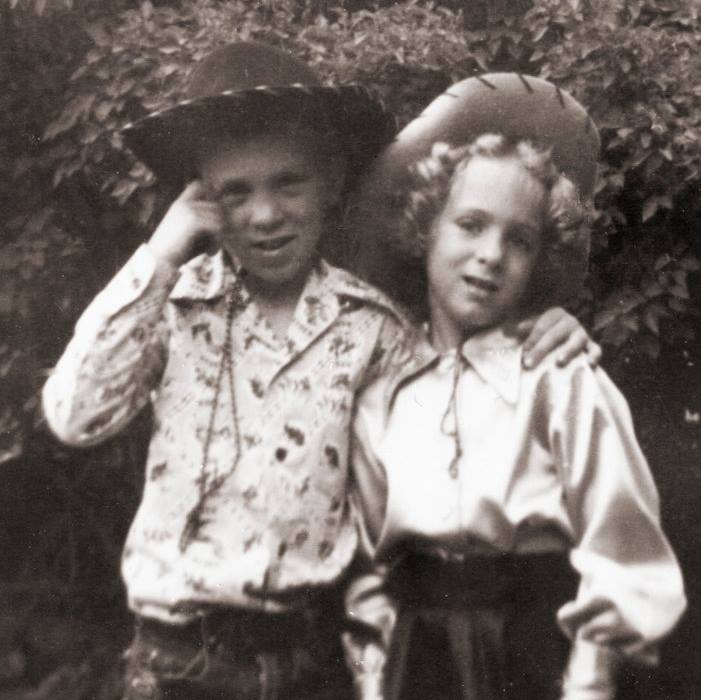
By the end of that summer, Bud’s job with the Customs Service was being phased out. Bud’s father Swain and his wife Edith were living in a very large home in Missoula, Montana, and they invited us to come and live with them. I was somewhat apprehensive about the living arrangement but housing was scarce and we had very little money, so we accepted the offer. Edith was a very good woman but she had married late in life and was very particular about her home and how it should be kept. After the first day I realized that there was no way this cohabitation could work. However, they had a large basement complete with toilet and shower. Bud and I decided that by whitewashing the walls, using the laundry tubs for a sink and putting in a small cooking stove, we could live there quite comfortably. And that is what we did. I think Edith was quite fond of the children in her way but would have preferred that they act like adults. One day she felt compelled to tell me that she had seen Jay riding his tricycle on the grass and was afraid it would make ruts in the lawn.


Swain had a real estate office and Bud felt he could share the office and build up a fire and casualty insurance business. He turned out to be a proficient businessman and built it into a very successful business. After we had lived in our basement unit for a little over a year, Bud got wind of a small house coming on the market for $4,600.00. He called and said he would pick me up to come and look at it. I told him I didn’t need to look at it. I WANTED it! So we moved up into the daylight.
Bud’s insurance was so successful that he and his dad moved into an office just off the lobby in the Florence Hotel, Missoula’s finest. Bud’s sister Lynn came for a visit and persuaded me to hire a woman at home and go to work for Bud in his office. We found a wonderful woman named Earlene to work at home and I thoroughly enjoyed my career change. My desk faced the hotel corridor off the lobby, and one day, just after returning from coffee with my coworker, a man stopped at my desk and said he had observed me in the coffee shop, and would I consider trying out for a part in “The Man Who Came to Dinner” which he would be directing for the recently formed Missoula Community Theater. I was quite overwhelmed and was dying to do it but realized the rehearsal time would put a strain on the family. But Bud, bless his heart gave his blessing and agreed to my trying for it.
I was cast as Lorraine Sheldon, the actress, who Whiteside calls in to thwart the romance of his trusted secretary. Eventually, after Whiteside realizes how much he is hurting his secretary, he coaxes Lorraine into a mummy case (a gift from an admirer) and has her hauled off stage. It’s a hilarious scene but no joke to 5-year-old Donna, sitting in the front row. She is crying bitterly for her mommy to be rescued.

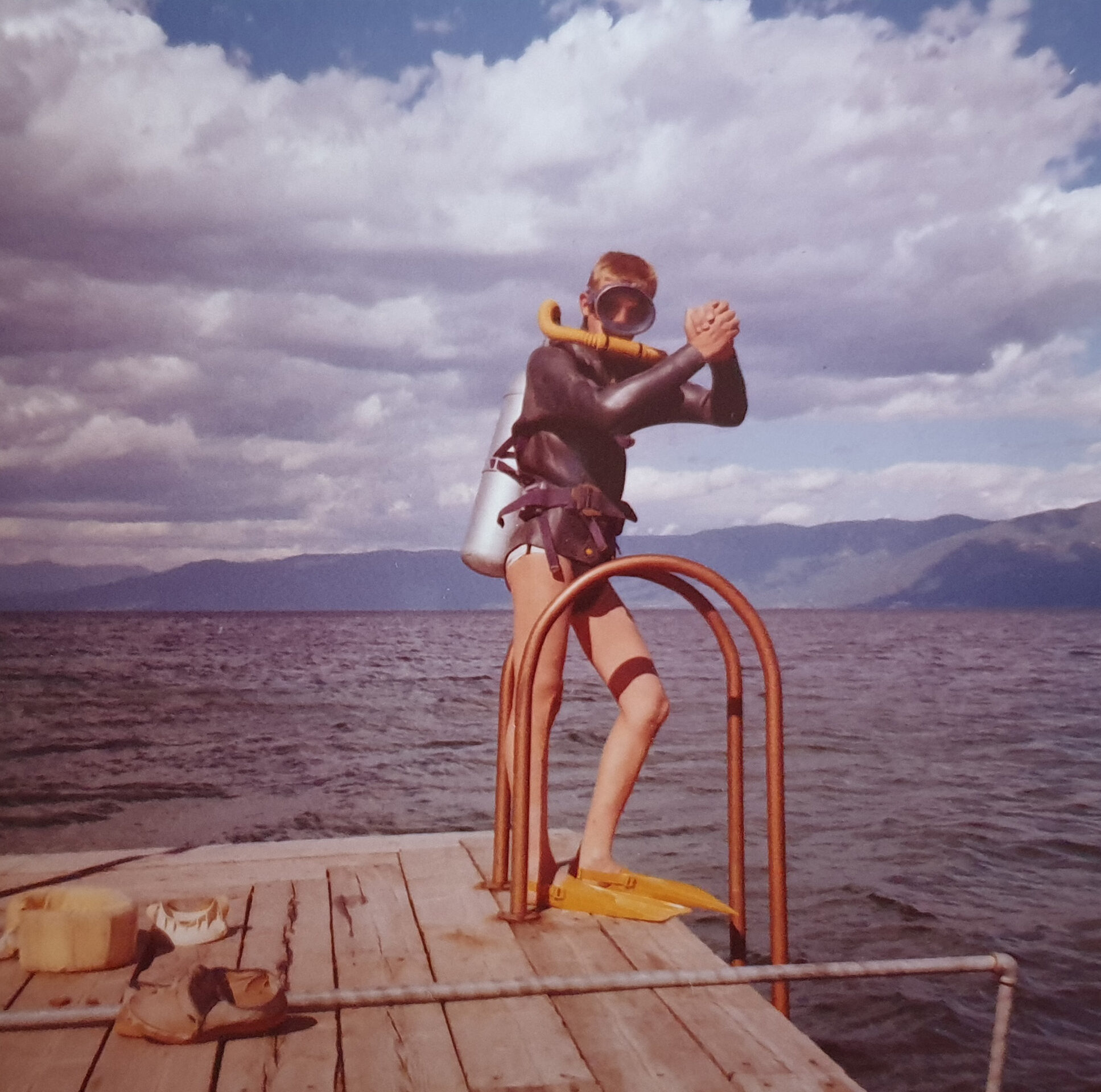
During the early 50’s we had some good family times. A great favorite was water- skiing on Flathead Lake, which we did often during the summer months. Flathead is such a beautiful lake, about 70 miles from Missoula. We would make a full day of it, swimming, water- skiing and picnicking–great fun! During the winter we would get together with friends and play canasta or just visit. After 3 or 4 years in our little house, we moved to a very nice home on Farviews, a beautiful hillside development. The house had been built by Bud’s friend Keith as an investment, but when he couldn’t find a buyer for it Bud agreed to buy it.
As time went on and Bud was becoming more and more successful in business, he became less and less interested in his wife and children. His high school cronies took advantage of his generosity and his recreation pretty much consisted of carousing with them. He began drinking excessively and found another woman who was more exciting than I was. When the idea of divorce was first broached, it seemed impossible to face. However, with the support of Bud’s sister, Lynn, and a session with Dr. Holmes, psychiatrist with the Mental Hygiene Clinic, I learned to accept it. So in the spring of 1956 we were divorced.
Bud was quite fair in the financial arrangements. He agreed to pay child support and alimony and granted me $15,000 to secure a modest house. In those days you could buy a house for that, and I surely couldn’t afford to live in our house on Farviews. I opted for a new pre-built home to be constructed in a new section of Missoula. The agreement was that I would move out of the Farviews house in June when my new house would be ready. Bud would then resume living in the Farviews house. Of course, nothing ever goes as planned and my new house wasn’t ready in June. Bud held me to my agreement so I had to find storage for my furniture and living quarters for the three of us for the 2 months until our house would be ready. Jay was now 13 and Donna was 11. The storage proved to be no problem. Swain had a storage shed that I could use. Living quarters was something else. No one wanted to rent a place for 2 months. I finally found 2 rooms in a large very old home, a kitchen and another room which became a bedroom, double bed for Donna and me and a spot on the floor for Jay. We had to share the bathroom with the owner. It was upstairs, as was the light, and there were no 2-way switches. A long cord hung down into the hallway to which my landlady had tied a thimble to make it easier to grab.
I have a reason for this explanation I had gotten back into Community Theater when Bud moved out. It was one of the few social outlets available to a divorced woman in Missoula in the 50’s. The technical director of the play for which I was rehearsing had offered to help me move. I believe he had a truck and between that and my station wagon we were able to transport my possessions. But oh, the hassle! Our last trip was to our rental hovel. By now it was dark and we were totally exhausted. When the last box was unloaded he asked, “Where is the bathroom?” I was just too tired to think or talk so I started, “There ..is..a…thimble…in..the..hall.” I stopped for a breath. He gave me an incredulous look and blurted, “That’s not big enough!”
The Cord of Wood

By August our house was ready for occupancy and we moved in. I had opted for a gas furnace because natural gas was that very year being brought into Missoula. The problem was that the new section where we lived was the last area to be completed. It was now late September and getting cold. I had a wood burning fireplace so could get along fine if I had some wood. My only neighbors were Doctor and Mrs. Jones. (this was a brand new area). Mrs. Jones had told me of a man names Robert. L. Johnston who supplied good cottonwood for $15.00 a cord, so I was eager to call him. The conversation went something like this:
“Mr. Johnston, my name is Lee Myrdal. I live on Dixon near Dr. Jones. Mrs. Jones has told me that you could supply fireplace wood and I would like to get some.”
“Well, yes,” said Mr. Johnston in a heavy Scottish accent, “ I have the wood and it’s cut into the proper lengths, but I have to wait for a good freeze to split it.”
“Oh”, I replied, “I have not been able to get my gas furnace connected and it’s getting cold. I really need the wood as soon as possible.”
“Well”, said Robert L., “I could bring it the way it is and you could split it yourself.”
“No, I don’t think I could do that.”
“Well, don’t you have a husband?”
“N..no, I don’t.”
“Oh Lassie. Did you lose him?”
“Well, No……”
“Oh, was he playin’ around on you?”
I sputtered a bit, changed the subject as best I could, and asked him to please bring the wood as soon as possible. He surprised me the next day by calling to tell me he would deliver the split wood the following afternoon.
Sure enough, he arrived on schedule, drove his truck around to the back of the house (the adjoining lots were vacant) and proceeded to stack the wood on my patio, just off my picture windows. I had gotten back into Community Theater after my divorce and was in rehearsal for a play at the time. My leading man worked as a lineman for the telephone company and had a job just down the street from my home. So he stopped at my place to call in and stayed for a cup of coffee. Robert L. kept stacking wood taking in everything that was happening in my living room. The telephone man left, and the technical director on the play, a morning radio announcer, knowing I would be home, stopped for a cup of coffee also. Robert L. is still stacking. After he left the Fuller Brush man came by. Jay had a part time job with him making deliveries, so he visited a bit too. After he left, Robert L. finished stacking the wood and collected his money..
A year passed and I needed more fireplace wood. Again I called Robert L .Johnston:
“Hello, Mr. Johnston, this is Lee Myrdal on Dixon and I need fireplace wood again. Can you bring me some?”
“Now let’s see—Myrdal–Dixon–. Are you the doctor’s wife or are you that widder woman our there.”
“Well, I guess I’m the widow.”
“Well, ain’t you married yet?”
“No, I’m not married”
“ Well now, there was 2 or 3 young fellers there last year. I thought sure you would have caught yourself a man by now.”
With my admission that I had not caught a man, he brought me another cord of wood, stacked it without incident, collected his money and left. Another year passed and again I needed wood.
“Hello, Mr. Johnston, this is Lee Myrdal on Dixon and I’d like another cord of wood.”
“Let’s see—Myrdal—Dixon—Are you the doctor’s wife or are you that there old maid out there?”
Well I got my wood. There was no excitement whatsoever for Robert L. When the next year rolled around, I learned that he was no longer delivering wood. I felt it was all for the best. Where could I go from there?

During the 8 years that we lived in the Dixon house, I had a variety of jobs. First, I worked at the Missoula Mercantile Ladies Sportswear Department, then at Garden City Floral as bookkeeper, and finally, at Town and Country Realty, as salesperson.
During most of these years I remained active in Missoula Community Theater. I worked on props, painted sets, etc. I was Production Manager for Arms and the Man, directed by Nancy Fields O’Connor, wife of Carroll O’Connor who was at the time appearing as Othello with the Masquers, the University of Montana theater group.

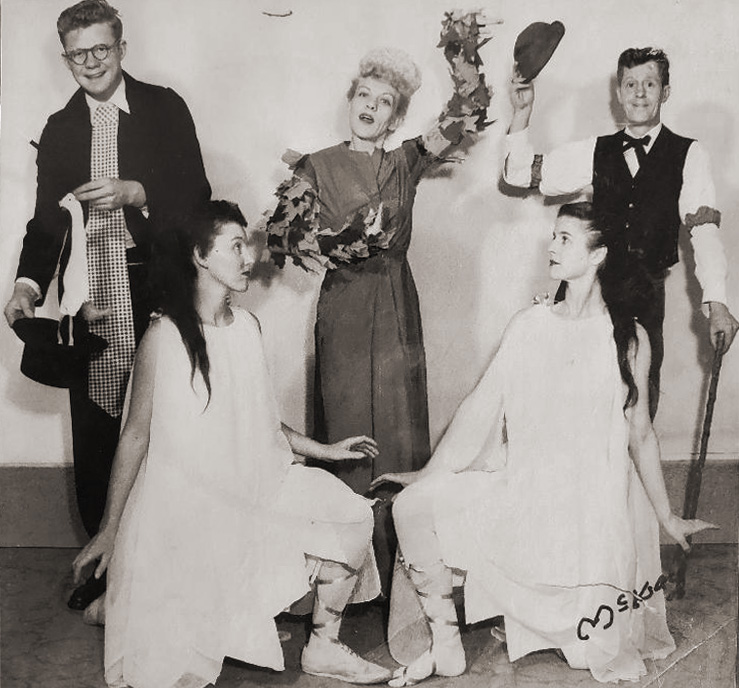
But my first love was acting. I had small cameo roles in Nothing But the Truth, The Fifth Season, and Janus; and leading roles in Dial M for Murder, See How They Run, The Pink Mirror, Make a Million, and A Majority of One. On two occasions, MCT gave cabaret style performances of The Drunkard, with hilarious olio productions. For the olio, I was dressed as a tree, billed as Madam Ponda Rosa, and rendered an ear-splitting, out-of-tune rendition of Trees. My favorite role has to be that of the lovable, no-nonsense Mrs. Jacoby in A Majority of One. The play was directed by my good friend and former sister-in-law Lynn Wolfe, and was a joyous experience.
5 Comments
Jay Myrdal
Leave a comment if you wish. I won’t remove comments unless they are offensive.
Eric Myrdal
Great detailed memories from your mother. Very glad you have shared them Jay.
Jay Myrdal
Thanks Eric. I too found her memories of early twentieth century Montana very interesting and historic.
Norma Walton
Fascinating look into the past.
Jay Myrdal
Thank you Norma. I fully agree. I was very pleased to be able to bring my mother’s thoughts to a wider audience. Hopefully my children will be able to preserve my thoughts for future generations too.
I suspect that this website is not forever and upgrading the technology will no doubt be required in the future.